


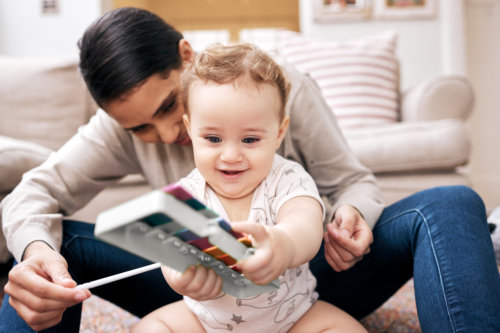

Music and movement play an important role in infant learning and early childhood development. Babies learn about the world through everyday experiences, from listening to familiar voices to reaching for toys and moving their arms and legs. These activities help infants explore sounds, develop coordination, strengthen sensory awareness, and build early communication skills. Incorporating music and movement into quality childcare experiences also creates opportunities for interaction, exploration, and growth.
Why Music and Movement Matter in Infant Development
During infancy, babies experience rapid physical, cognitive, and sensory development. Music and movement provide enjoyable ways to support these milestones while encouraging curiosity and interaction.
Some key developmental benefits include:
- Language and communication: Listening to songs and familiar voices helps infants recognize sounds, rhythms, and speech patterns.
- Motor skill development: Kicking, stretching, reaching, and swaying help strengthen muscles and improve coordination.
- Sensory exploration: Different sounds and movements stimulate a baby’s developing senses.
- Emotional connection: Singing and moving with caregivers create comforting experiences that encourage bonding and trust.
At Willow Bend Learning Center, age-appropriate activities and nurturing interactions help create positive early learning experiences for infants.
How Music Supports Early Learning
Music introduces babies to different sounds, tones, and rhythms. Even before infants can speak, they begin recognizing familiar voices and responding to changes in sound.
Encourages Early Language Development
Gentle songs, nursery rhymes, and repetitive sounds help babies become familiar with language patterns. Singing simple songs and repeating familiar words can encourage listening and early communication.
Caregivers can support language development through activities such as:
- Singing nursery rhymes – Introduces familiar words, sounds, and repetition.
- Talking and singing throughout the day – Encourages babies to listen and respond to voices.
- Repeating simple sounds – Helps infants recognize different tones and vocal patterns.
Strengthens Memory and Listening Skills
Repetitive songs and familiar melodies help infants recognize patterns and develop listening skills. Babies may respond to favorite songs through smiles, movements, or excited sounds.
These experiences encourage attention and help infants become familiar with their surroundings.
Creates Opportunities for Emotional Bonding
Music can provide comfort and reassurance. Soft lullabies and gentle singing create peaceful moments between infants and caregivers.
These shared experiences strengthen emotional connections and help babies feel safe and supported.
Why Movement Matters for Infant Development
Movement is another important part of early learning. Babies gradually discover what their bodies can do through simple actions such as kicking, stretching, rolling, and reaching.
Supports Physical and Motor Development
Movement activities help infants develop strength, balance, and coordination. As babies grow, they use their muscles to explore their surroundings and practice new physical skills.
Age-appropriate activities include:
- Tummy time – Encourages upper-body strength and prepares babies for future movements.
- Reaching for toys – Supports hand-eye coordination and controlled movements.
- Gentle stretching and kicking – Helps infants explore their bodies and develop muscle strength.
All movement activities should be appropriate for the baby’s developmental stage and supervised by a caregiver.
Encourages Curiosity and Sensory Exploration
Movement allows infants to interact with their environment and discover new experiences. Reaching for colorful toys, following moving objects, and responding to sounds encourage curiosity and exploration.
These experiences also complement activities that encourage curiosity in infancy, helping babies learn through everyday interactions.
Simple Music and Movement Activities for Infants
Parents and caregivers can incorporate music and movement into daily routines without complicated materials or equipment.
Some simple ideas include:
- Clapping along to songs – Introduces rhythm and encourages babies to observe movements.
- Gentle swaying – Allows infants to experience movement while enjoying familiar music.
- Playing with soft rattles – Introduces cause-and-effect relationships through sound.
- Singing during daily routines – Makes activities such as diaper changes and playtime more engaging.
- Supervised floor play – Gives babies opportunities to stretch, kick, reach, and explore.
These activities should always be gentle, enjoyable, and tailored to each infant’s comfort and abilities.
Supporting Infant Learning
We understand that every baby develops at their own pace. Our infant program provides a safe, loving, and stimulating environment where babies can explore, interact, and experience meaningful early learning opportunities.
Through nurturing interactions, age-appropriate activities, and attentive care, we aim to support each child’s developmental needs while helping them feel secure and comfortable.
Our approach encourages curiosity, sensory exploration, and early development through positive everyday experiences.
Conclusion
Music and movement are valuable parts of infant learning and early childhood development. From singing nursery rhymes to encouraging gentle movement, these activities help babies develop listening skills, coordination, sensory awareness, and emotional connections.
At Willow Bend Learning Center, we believe meaningful early learning begins with nurturing care and engaging experiences. Our programs provide opportunities for children to explore, grow, and develop in supportive environments.
Interested in learning more about our childcare programs? Contact us today to discover how we can support your child’s early learning journey.


