



Early Childhood Education and Childcare in Plano: A Parent’s Complete Guide
Choosing the right early learning environment is one of the most important decisions a parent can make. The early years of a child’s life lay the foundation for academic success, social confidence, emotional intelligence, and lifelong curiosity. Whether you are exploring infant care, toddler programs, or preschool options, understanding how early childhood education works can help you make a confident and informed choice.
In a growing community like Plano, families have many childcare options. However, not all programs are created equal. A high quality early learning center blends structured curriculum, nurturing guidance, and developmentally appropriate activities to support every stage of growth. This guide explains what early childhood education means, how Montessori inspired learning works, what programs to expect, and how to choose the best childcare center for your child.
What Is Early Childhood Education?
Early childhood education refers to structured learning experiences designed for children from infancy through age five. During this period, the brain develops rapidly, forming neural connections that shape language, behavior, memory, and emotional regulation.
Why Early Learning Matters in the First Five Years
The first five years are often called the “foundation years.” During this time, children develop essential cognitive and social skills. Quality preschool education helps children learn how to communicate, cooperate, solve problems, and build independence.
Research consistently shows that children who participate in strong early learning programs perform better academically and socially later in life. They enter kindergarten with stronger literacy skills, improved attention spans, and greater emotional resilience.
Key Development Stages in Infants and Preschoolers
Each age group experiences unique developmental milestones:
- Infants (0–12 months): Sensory exploration, bonding, and motor skill development
- Toddlers (1–3 years): Language growth, independence, and social awareness
- Preschoolers (3–5 years): Critical thinking, early literacy, and emotional regulation
Understanding these stages ensures that childcare programs match activities to developmental readiness.
How Preschool Shapes Cognitive and Social Growth
A structured preschool program introduces children to early math, reading, problem solving, and collaboration. Group activities encourage teamwork, while guided lessons develop listening skills and focus. These experiences help children build confidence and adaptability.
Understanding Montessori Education and Its Benefits
Many parents exploring childcare in Plano encounter Montessori inspired programs. This educational approach emphasizes independence, hands on learning, and respect for a child’s natural development.
What Is the Montessori Teaching Method?
The Montessori method is centered around child led exploration within a structured environment. Teachers act as guides rather than lecturers, encouraging children to choose activities that match their interests and developmental level.
Classrooms are carefully prepared with materials designed to build practical life skills, sensory awareness, math understanding, and language development.
Montessori vs Traditional Preschool: What’s the Difference?
Traditional preschool programs often follow teacher directed lessons with group instruction. Montessori inspired programs allow children to work independently while still following a structured curriculum.
Key differences include:
- Flexible work periods
- Mixed age interaction opportunities
- Emphasis on independence
- Hands on learning materials
Both approaches can be effective, but Montessori environments often foster stronger self discipline and intrinsic motivation.
How Child Led Learning Builds Independence
When children choose activities and work at their own pace, they develop responsibility and confidence. This independence strengthens problem solving skills and encourages lifelong curiosity.
 Childcare Programs by Age Group
 Childcare Programs by Age Group
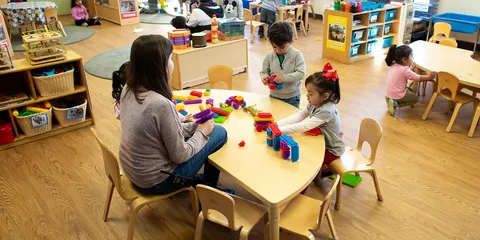
Quality childcare centers provide age specific programs designed to meet developmental needs while supporting working families.
Infant Care Programs: Safe and Nurturing Foundations
Infant programs focus on safety, bonding, and sensory exploration. Caregivers provide individualized attention, structured feeding schedules, and stimulating activities that promote early motor and cognitive development.
A nurturing infant environment builds trust and emotional security.
Toddler Programs: Encouraging Exploration and Growth
Toddlers are naturally curious and energetic. A strong toddler childcare program includes:
- Language building activities
- Guided play
- Social interaction
- Early problem solving exercises
Structured routines help toddlers feel secure while still encouraging independence.
Preschool & Pre K Programs: Preparing for Kindergarten
Preschool and Pre K programs prepare children academically and socially for elementary school. Children develop early literacy, number recognition, and foundational math skills.
Kindergarten readiness includes:
- Recognizing letters and sounds
- Counting and simple math
- Following instructions
- Cooperative play
These structured learning experiences reduce anxiety during the transition to formal schooling.
After School Enrichment Programs
For school age children, after school programs provide a safe and engaging environment. Homework assistance, creative activities, and supervised recreation support continued growth beyond classroom hours.
Summer Camp Programs for School Age Children
Summer programs combine education and fun. Activities may include STEM projects, creative arts, outdoor play, and themed learning weeks that keep children engaged during school breaks.
What to Look for in a Childcare Center in Plano
Choosing the right childcare center requires careful evaluation. Parents should look beyond convenience and consider quality indicators.
Licensed and Safe Learning Environments
A reputable childcare center should meet state licensing requirements and maintain strong safety protocols. Clean classrooms, secure entry systems, and age appropriate equipment are essential.
Qualified Teachers and Curriculum Standards
Teachers should have early childhood education training and experience working with young children. A structured curriculum ensures consistent development rather than unplanned activities.
Parent Communication and Transparency
Strong childcare programs prioritize communication. Regular updates, progress reports, and open dialogue between parents and teachers build trust and partnership.
Full Time vs Part Time Childcare Options
Flexible scheduling supports diverse family needs. Whether parents require full time infant care or part time preschool, accessibility matters.
How Early Childhood Education Builds Lifelong Skills
The benefits of early childhood education extend far beyond kindergarten.
Social and Emotional Development
Children learn empathy, patience, and cooperation through structured interaction. Group activities teach sharing and respectful communication.
Building Confidence and Independence
When children complete tasks independently, they develop confidence in their abilities. This self assurance carries into academic and personal growth.
Developing Early Literacy and STEM Foundations
Exposure to reading, storytelling, counting, and problem solving builds essential academic skills. STEM based preschool activities encourage curiosity and logical thinking.
Encouraging Routine and Responsibility
Consistent daily routines teach time management and responsibility. Children thrive in environments where expectations are clear and structured.
Why Local Families Choose a Montessori Inspired Childcare Center in Plano
Families in Plano often seek programs that combine structured academics with nurturing care. A Montessori inspired childcare center offers:
Community Focused Learning
Children benefit from being part of a supportive community environment that values collaboration and inclusion.
Safe, Structured, and Engaging Classrooms
Prepared classrooms promote exploration while maintaining clear boundaries and expectations.
Programs Designed for Working Parents
Extended care options, enrichment programs, and summer camps provide reliable support for busy families.
Conclusion
Early childhood education plays a powerful role in shaping a child’s academic, social, and emotional future. From infant care to preschool readiness and beyond, a structured and nurturing environment helps children build confidence, independence, and curiosity. Families seeking a trusted and enriching childcare experience in Plano can explore programs designed to support every stage of development at Willow Bend Learning Center.
Frequently Asked Questions
What age should a child start preschool?
Most children begin preschool between ages three and four, though toddler programs may start earlier depending on developmental readiness.
Is Montessori better than traditional daycare?
Both approaches can be effective. Montessori inspired programs emphasize independence and hands on learning, while traditional programs may offer more structured group instruction.
How do I know if a childcare center is right for my child?
Observe classroom interaction, review safety standards, and ensure the curriculum aligns with your child’s needs and personality.
What is included in a preschool curriculum?
A quality preschool curriculum includes early literacy, math basics, social skills development, creative arts, and physical activity.
Do childcare centers offer flexible scheduling options?
Many centers provide full time, part time, and after school options to accommodate family schedules.


